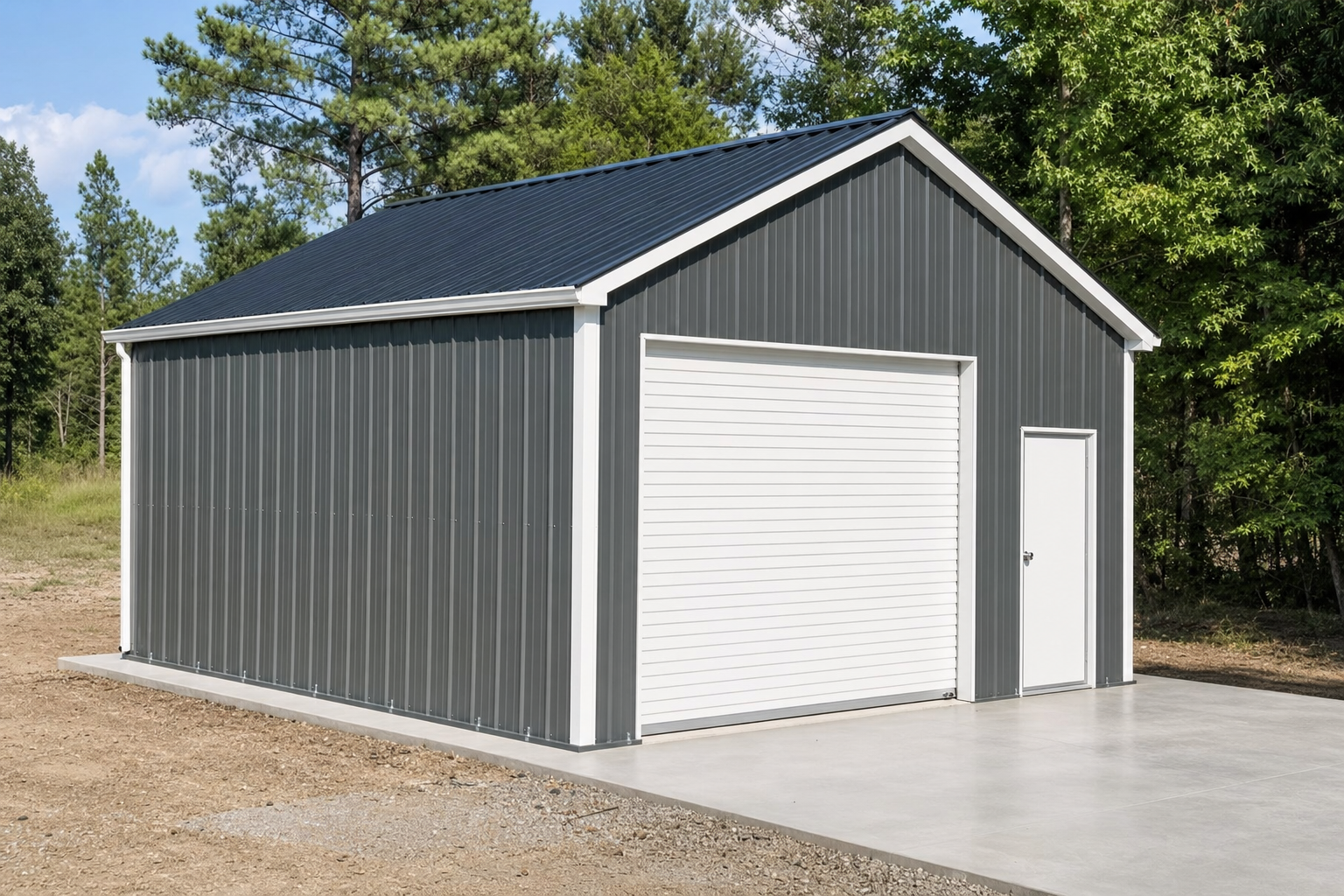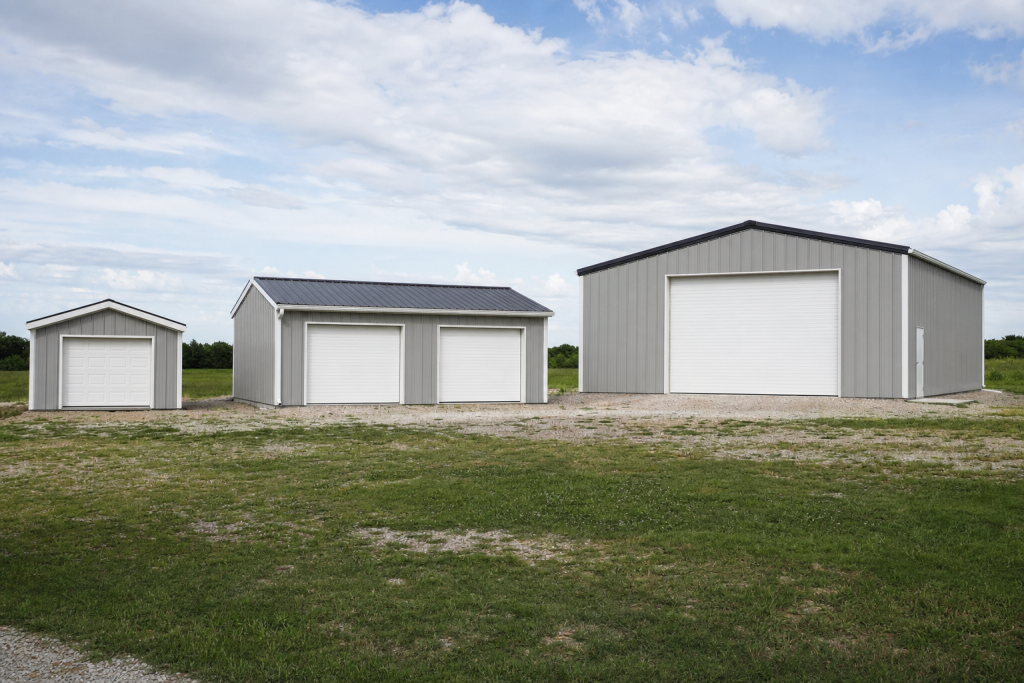
You’re shopping for a metal garage and the quotes range from $6,000 to $75,000 or more. That’s not a price range, that’s a dart board. Does that number include the foundation? Installation? Delivery? Or just the bare steel sitting on a truck?
This guide strips away the confusion with a transparent look at metal garage cost in 2026 — what pushes prices up or down, what’s actually included in a typical quote, and how to budget for the whole project from foundation to final bolt.
Whether you need a simple single-car garage or a full custom workshop, you’ll know what to expect and which questions to ask. Want a real number for your property? Call us at (866) 941-4072 or schedule a free consultation.
Metal Garage Cost Overview: What to Expect in 2026
The short answer: Metal garage costs land between roughly $6,000 and $75,000+ depending on size, style, customization, and where you live. Most basic single-car garages start around $3,200–$7,500, two-car garages typically run $5,200–$14,400, and large workshop setups can blow past $25,000.
But here’s why pricing feels like a maze: that wide spread reflects wildly different products, included features, and what the quote actually covers.
National Average Pricing Ranges
Here’s a quick reference for typical metal garage costs by popular size:
| Garage Size | Square Footage | Typical Cost Range | Average Cost |
|---|---|---|---|
| 18×20 (Single-car) | 360 sq ft | $3,200 – $7,500 | $5,350 |
| 20×20 (Single-car) | 400 sq ft | $3,600 – $8,000 | $5,800 |
| 24×24 (Two-car) | 576 sq ft | $5,200 – $11,500 | $8,350 |
| 24×30 (Two-car) | 720 sq ft | $6,500 – $14,400 | $10,450 |
| 30×40 (Large/Workshop) | 1,200 sq ft | $10,800 – $24,000 | $17,400 |
| 35×75 (Commercial) | 2,625 sq ft | $25,000 – $65,000+ | $45,000 |
Note: These prices typically reflect the structure only and may not include foundation, site preparation, or installation labor.
Key Factors That Determine Your Final Cost
Six primary factors account for most price variation in metal garage projects:
- Size and square footage – Bigger buildings cost more, but you get better per-square-foot value as you scale up
- Roof style – Regular, horizontal, or vertical roofs range from base price to a $1,200+ premium
- Customization level – Doors, windows, insulation, and electrical add-ons stack up fast
- Foundation requirements – Often the biggest “hidden” cost, tacking on $2,000–$12,000+
- Geographic location – Delivery distance, labor rates, and local building codes all vary by region
- Installation method – DIY saves thousands but demands time and skill; professional crews add 30–40% to material costs
Metal Garage Cost Per Square Foot: Breaking Down the Numbers
Suppliers typically quote metal garage prices as a cost per square foot — anywhere from $8 to $25 or more. Knowing what you actually get at each price tier keeps you from comparing apples to oranges when stacking quotes side by side.
Budget Tier: $8-$12 Per Square Foot
At this entry-level price point, you’re getting a basic but functional metal garage structure:
What’s included:
- Standard 14-gauge or 12-gauge steel framing
- Regular (rounded) roof style
- Basic color options (typically 10–15 standard colors)
- Standard 9–10 foot leg height
- One walk-in door and one roll-up garage door (on most packages)
- Manufacturer’s structural warranty
What’s typically NOT included:
- Foundation or concrete slab
- Premium roof styles (vertical or horizontal)
- Insulation
- Extra windows or doors beyond the basic package
- Electrical wiring or lighting
- Professional installation (may be DIY or quoted separately)
Best for: Property owners who need basic vehicle or equipment protection on a tight budget, especially in moderate climates where a regular roof style holds up fine.
Standard Tier: $12-$18 Per Square Foot
This mid-range pricing reflects upgraded materials and real customization:
What’s included:
- Heavier gauge steel (often 12-gauge framing, 29-gauge panels)
- Horizontal or vertical roof options
- Expanded color selection
- Certified wind and snow load ratings for your region
- Multiple door and window configurations
- Enhanced warranty coverage
- Often includes delivery and professional installation
Best for: Two-car garages and workshop spaces where climate protection, durability, and some customization actually matter. Honestly, this tier hits the sweet spot of value and features for most residential buyers.
Premium Tier: $18-$25+ Per Square Foot
Top-tier pricing gets you a fully customized building with premium everything:
What’s included:
- Heavy-duty commercial-grade steel
- Vertical roof style (the best option for shedding snow and rain)
- Fully customized dimensions and configurations
- Complete insulation packages (R-10 to R-19 values)
- Multiple garage doors, windows, and walk-in doors
- Electrical rough-in and wiring
- Enhanced structural certifications (150+ mph wind ratings, heavy snow loads)
- Full installation services
- Extended warranties
Best for: Large workshops, commercial use, regions with brutal weather, or anyone who wants a turn-key solution built to last decades.
How Roof Style Affects Metal Garage Pricing
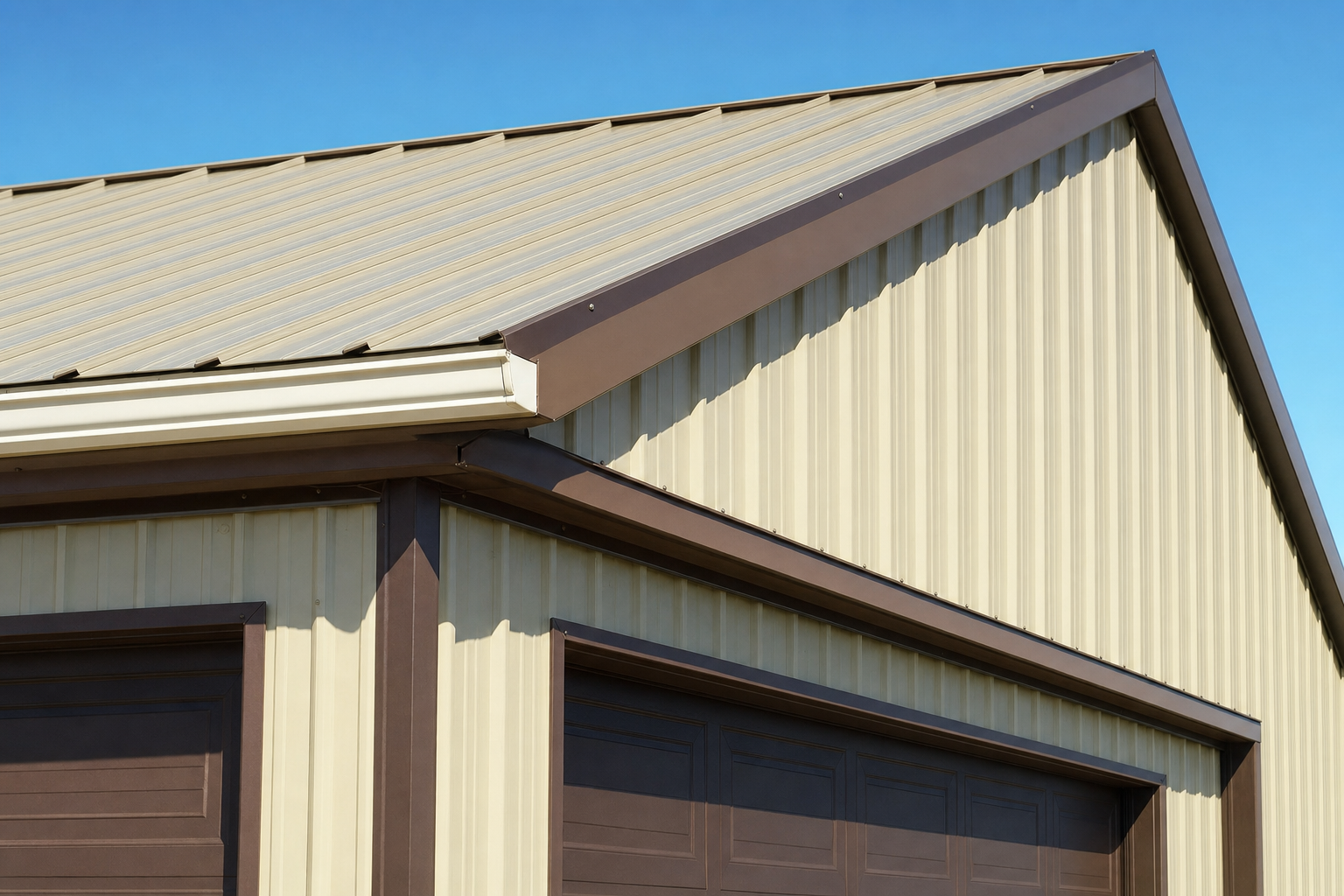
Your roof style is one of the most significant design decisions you’ll make — it affects both what you pay upfront and how the building performs over years of weather exposure. Three primary options exist: regular, horizontal, and vertical. Each comes with distinct trade-offs.
Regular (Rounded) Roof: Most Economical Option
Cost impact: Base price (no additional charge)
Regular roofs work fine in moderate climates with minimal snow and average rainfall. That said, they have real limitations. Snow and debris tend to sit on that rounded surface, water drainage isn’t as efficient as peaked designs, and they’re not a good fit for areas where snow loads exceed 20 pounds per square foot.
Best applications: Temporary structures, mild climates with little snow, and budget-driven projects where maximum weather protection isn’t the priority.
Horizontal Roof: Mid-Range Option
Cost impact: $200 – $500 additional (varies by size)
Horizontal roofs step up performance over regular roofs while keeping costs reasonable. Their A-frame or peaked profile handles moderate snow loads better and moves water off the structure more efficiently.
Best applications: Moderate climates with occasional snow, or properties where you want something that looks sharper but can’t justify the premium tier.
Vertical Roof: Premium Performance
Cost impact: $600 – $1,200+ additional (varies by size)
Vertical roofs are the gold standard for metal garage construction. Period. Snow and rain slide right off, wind resistance is markedly stronger, the lifespan in harsh climates stretches further, and many building codes in heavy snow regions actually require them.
Cost-benefit analysis: Yes, vertical roofs add $600–$1,200 upfront. But they can extend your building’s lifespan by 5–10 years and prevent expensive snow damage repairs down the road. If you’re planning to keep your garage long-term, the vertical roof pays for itself through better durability and lower maintenance costs.
Foundation and Site Preparation Costs
Here’s the thing nobody tells you upfront: the foundation often represents the single largest “hidden” cost in a metal garage project. Most advertised prices spotlight the structure alone, and property owners get blindsided when foundation costs rival — or exceed — the building price itself.
Concrete Slab Foundation
Cost range: $4 – $8 per square foot ($2,880 – $5,760 for a 24×30 garage)
A concrete slab is the most common and recommended foundation for metal garages. Typical slab work includes site excavation and grading, a gravel base layer, vapor barrier installation, concrete pouring, wire mesh or rebar reinforcement, and finishing.
Factors affecting slab costs:
- Soil conditions: Poor soil means extra excavation and base prep
- Accessibility: If concrete trucks can’t get close, labor costs climb
- Thickness requirements: Storing heavy equipment? You may need a 6-inch slab instead of the standard 4-inch
- Regional labor rates: Concrete work pricing swings dramatically by location
Alternative Foundation Options
Gravel pad: $1 – $3 per square foot. Cheaper, sure — but limited in benefits and not suitable for any kind of finished interior space.
Pier foundation: $2,000 – $5,000. Concrete piers work well on uneven terrain and provide solid drainage in flood-prone areas.
Asphalt pad: $3 – $5 per square foot. A middle-ground option with faster installation, though it won’t last as long as concrete.
Site Preparation Beyond Foundation
Budget an additional $500 – $3,000 for site preparation depending on your property’s condition:
Grading and leveling: $500 – $2,000 for sloped or uneven building sites.
Utility access: $300 – $2,000+ for trenching electrical service, running water lines, and installing drainage.
Permits and inspections: $200 – $1,500 for building permits, electrical permits, and required inspections. Don’t skip this — code violations are expensive headaches.
Installation Costs: DIY vs. Professional
How you handle installation dramatically changes your total project cost. The trade-offs are real, and the right call depends on your skills, available time, and budget.
Professional Installation
Cost: 30–40% of structure cost (typically $2,000 – $10,000+ depending on size)
Professional installation covers complete building assembly, anchoring to your foundation, door and window installation, trim and flashing, cleanup, and a workmanship warranty. You get faster completion (1–3 days versus 1–2 weeks DIY), experienced crews, guaranteed work, and zero tool investment.
When professional installation makes sense: Large buildings (30×40 and up), complex customization, limited construction experience, tight timelines, or vertical roof systems.
DIY Installation
Cost: $200 – $800 (tool rental and helper labor)
Going DIY means you’ll need 2–4 helpers, a mix of basic and specialized tools, 2–5 full days of work, and moderate construction skills. The payoff? Saving $2,000–$10,000. The downsides? Weather-dependent scheduling, risk of assembly mistakes, potential warranty complications, and a serious time commitment.
DIY recommendation: DIY works best for smaller garages (24×30 and under) with regular or horizontal roofs. Once you’re looking at vertical roof systems or buildings over 1,000 square feet, professional installation is worth every dollar.
Customization Costs: Doors, Windows, and Upgrades
Customization is what turns a basic metal shell into a workspace that actually fits your life. Knowing what each upgrade costs lets you prioritize the features that matter most without blowing your budget.
Additional Doors
Roll-up garage doors: $600 – $1,500 each for standard 9×8 or 10×10 sizes with manual operation. Automatic openers add $300–$800, and insulated versions tack on $200–$400.
Walk-in doors: $200 – $600 each for standard 36-inch steel doors including frame and lockset. Upgraded commercial-grade doors with windows or beefed-up security run $400–$800.
Overhead doors with windows: $800 – $2,000 each. These premium garage doors bring in natural light and look noticeably better from the street.
Windows
Standard windows: $150 – $400 each for basic 30×30 or 36×36 vinyl-framed windows with screens.
Larger windows: $300 – $600 each for 48×48 or custom sizes — great if you want real natural light inside.
Insulated windows: Add $100 – $200 per window for double-pane insulated glass that meaningfully improves energy efficiency.
Insulation Packages
Basic insulation: $1.50 – $2.50 per square foot for standard R-10 coverage in walls and ceiling. For a 24×30 garage, that’s $1,080–$1,800.
Premium insulation: $2.50 – $4.00 per square foot for R-13 to R-19 insulation with vapor barriers and better thermal performance.
Spray foam insulation: $3.00 – $5.00 per square foot. Superior insulation value and air sealing, but it’s the priciest route by a wide margin.
Electrical and Lighting
Basic electrical package: $800 – $2,000 for a service panel, basic wiring, outlets, and switches.
Complete electrical system: $2,000 – $5,000+ for full wiring, LED lighting, dedicated tool circuits, and HVAC prep.
Solar panels: $3,000 – $8,000 for solar power systems that offset ongoing electrical costs for workshop use.
Other Popular Upgrades
Gutters and downspouts: $4 – $8 per linear foot ($300–$600 for a typical garage).
Lean-to or attached carport: $2,000 – $6,000 depending on size and roof style.
Ventilation systems: $200 – $800 for ridge vents, turbine vents, or powered exhaust fans.
Interior finishing: $1,500 – $5,000+ for drywall, finished walls, or custom storage solutions.
Regional Cost Variations
Where you live has a real impact on your metal garage cost — delivery distance, local labor rates, and building code requirements all shift the numbers.
High-Cost Regions
West Coast (California, Washington, Oregon): Expect 15–25% higher costs thanks to elevated labor rates, stricter building codes, and seismic requirements. That 24×30 garage averaging $10,450 nationally? It might run $12,000–$13,000 out here.
Northeast (New York, Massachusetts, Connecticut): Similar 15–25% premiums driven by high labor costs and heavy snow load requirements that often mandate vertical roofs and reinforced framing.
Moderate-Cost Regions
Southeast (North Carolina, South Carolina, Georgia, Tennessee): Pricing tends to land 5–10% below national averages. Lower labor rates and favorable building conditions help keep things competitive.
Midwest (Ohio, Indiana, Illinois, Missouri): Costs hover near the national average with solid supplier competition and straightforward building requirements.
Low-Cost Regions
South Central (Texas, Oklahoma, Arkansas, Louisiana): These states often deliver the lowest metal garage costs nationally — typically 10–20% below average. Shorter delivery distances from major manufacturing hubs, lower labor rates, and less demanding building codes all work in your favor. A 24×30 garage that averages $10,450 nationally might come in around $8,400–$9,400 in these markets.
Mountain West (Montana, Wyoming, Idaho): Despite rural locations, competitive pricing exists due to lower labor costs — though delivery charges can offset some savings depending on how far you are from a distribution center.